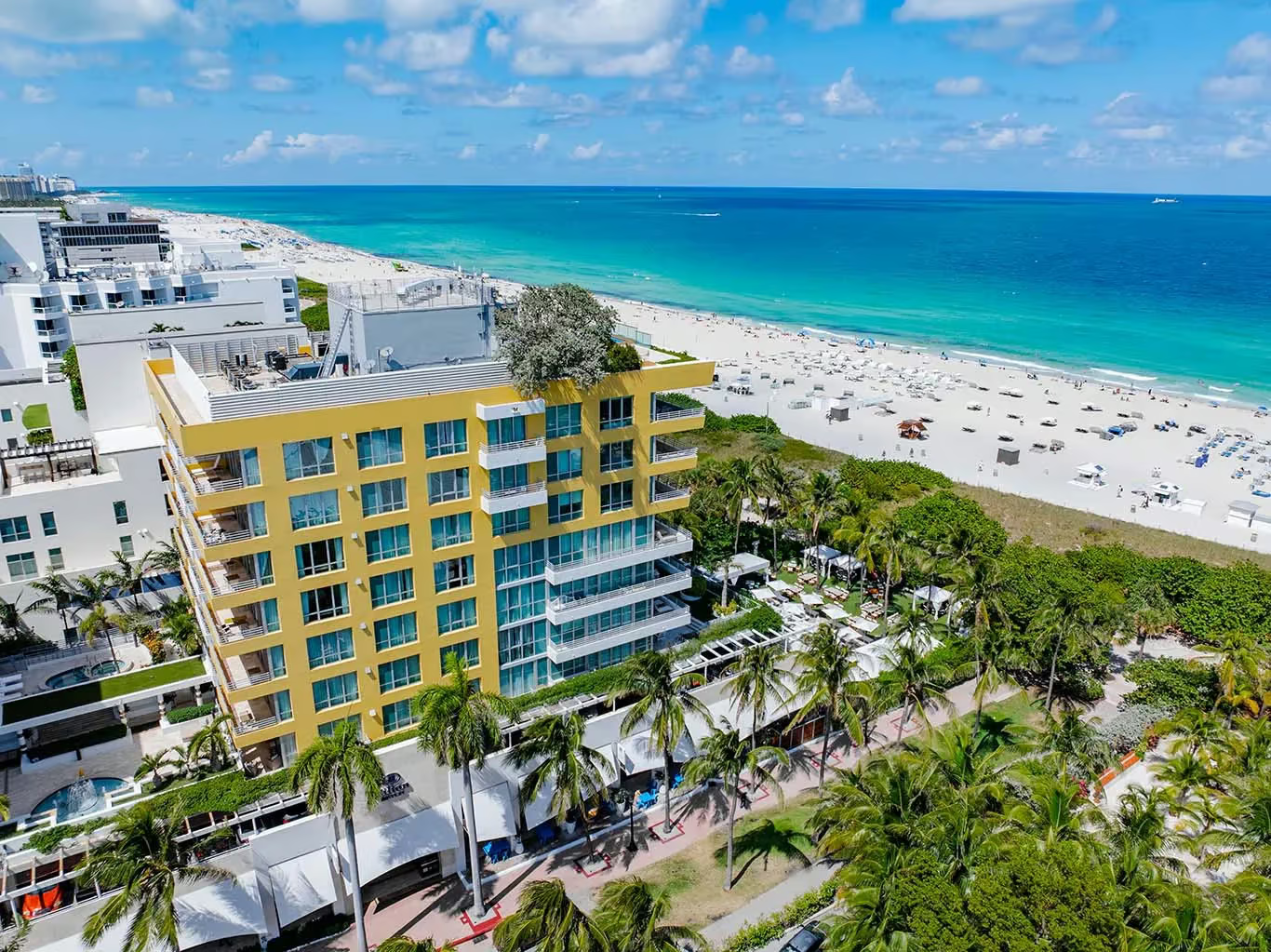

The Best Ways to Visit Miami: Season, Neighborhoods, and Where to Stay
Miami drew 28.3 million visitors in 2025, generating $32.2 billion in total economic impact and cementing its position as one of the most visited cities in the United States. What makes Miami unusual as a destination is how dramatically the experience varies depending on when you go, which part of the city you stay in, and how you plan your accommodation. Get those three variables right, and the city runs beautifully. Get them wrong, and you’re paying peak prices for a version of Miami that isn’t running at its best. This guide covers all three.
Key Takeaways
- Miami drew 28.3 million visitors in 2025, generating $32.2 billion in total economic impact, up 4.1% from 2024 (Oyster Link, 2026).
- The best value windows are late October and May outside major event weekends: excellent weather, favorable prices, fewer crowds.
- Peak season (December through April) is Miami’s most expensive and most eventful period, including Art Basel, F1, Ultra, and the Miami Open.
- South Beach provides the most walkable base for first-time visitors; Wynwood suits art and design-focused travelers.
- For stays of three nights or more, a private vacation condo in South Beach typically costs less than a comparable hotel room once resort fees are factored in.
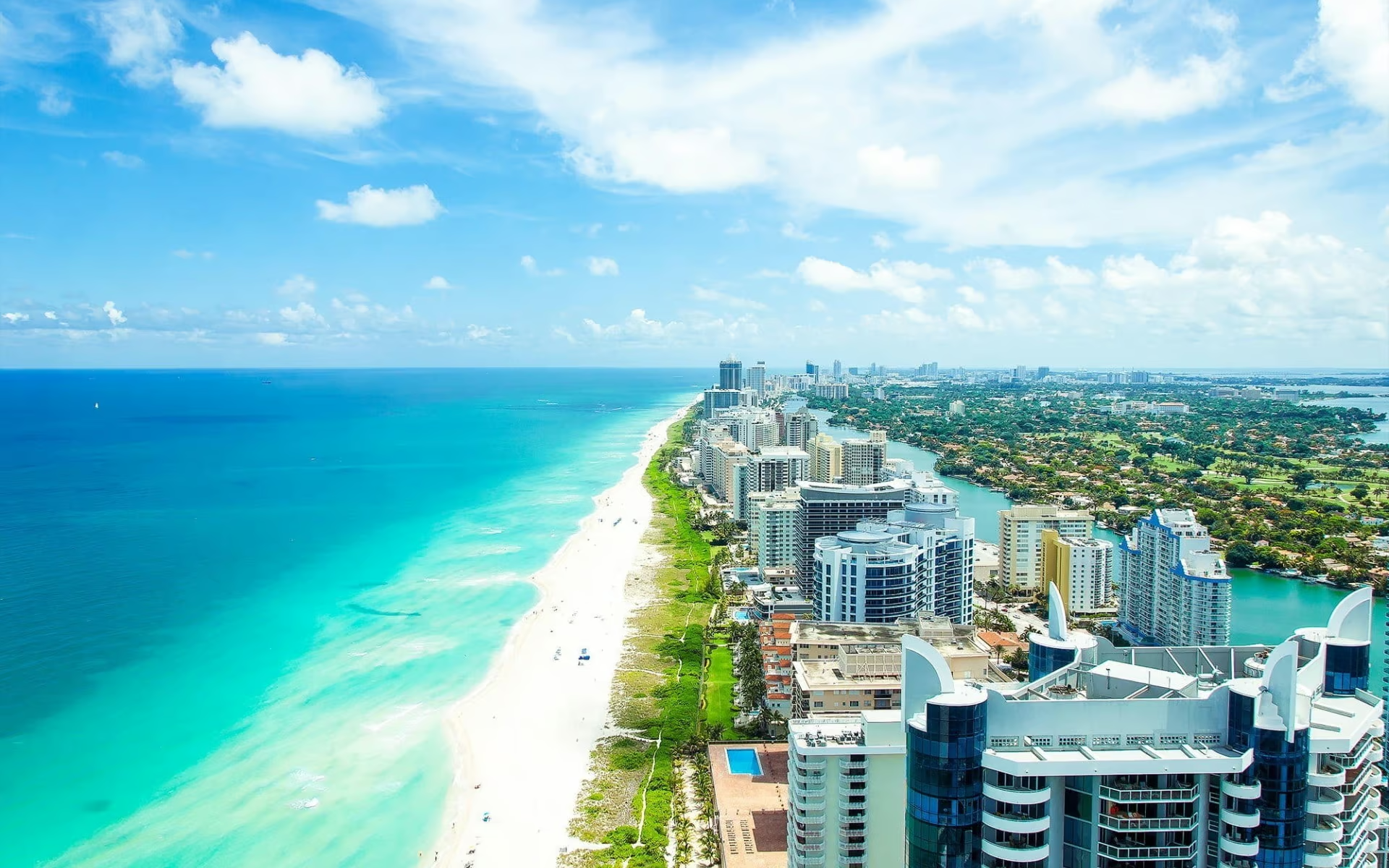
When to Visit Miami: A Season-by-Season Guide
Miami’s weather and pricing follow a calendar that’s almost the inverse of most U.S. cities’. Summers are hot, humid, and rainy. The most comfortable weather, dry season, runs roughly December through April, which also happens to be when prices peak, and events stack up. Understanding this rhythm is the single most useful thing a first-time visitor to Miami can learn.
Miami’s dry season (December through April) features average temperatures of 65-82°F, low humidity, and infrequent rain, making it the most comfortable time to visit but also the most expensive. Hotel rates and vacation rental prices in Miami Beach during this window run 30-50% above summer-season rates for comparable properties (Juvia Homes, 2025).
December Through April: Peak Season
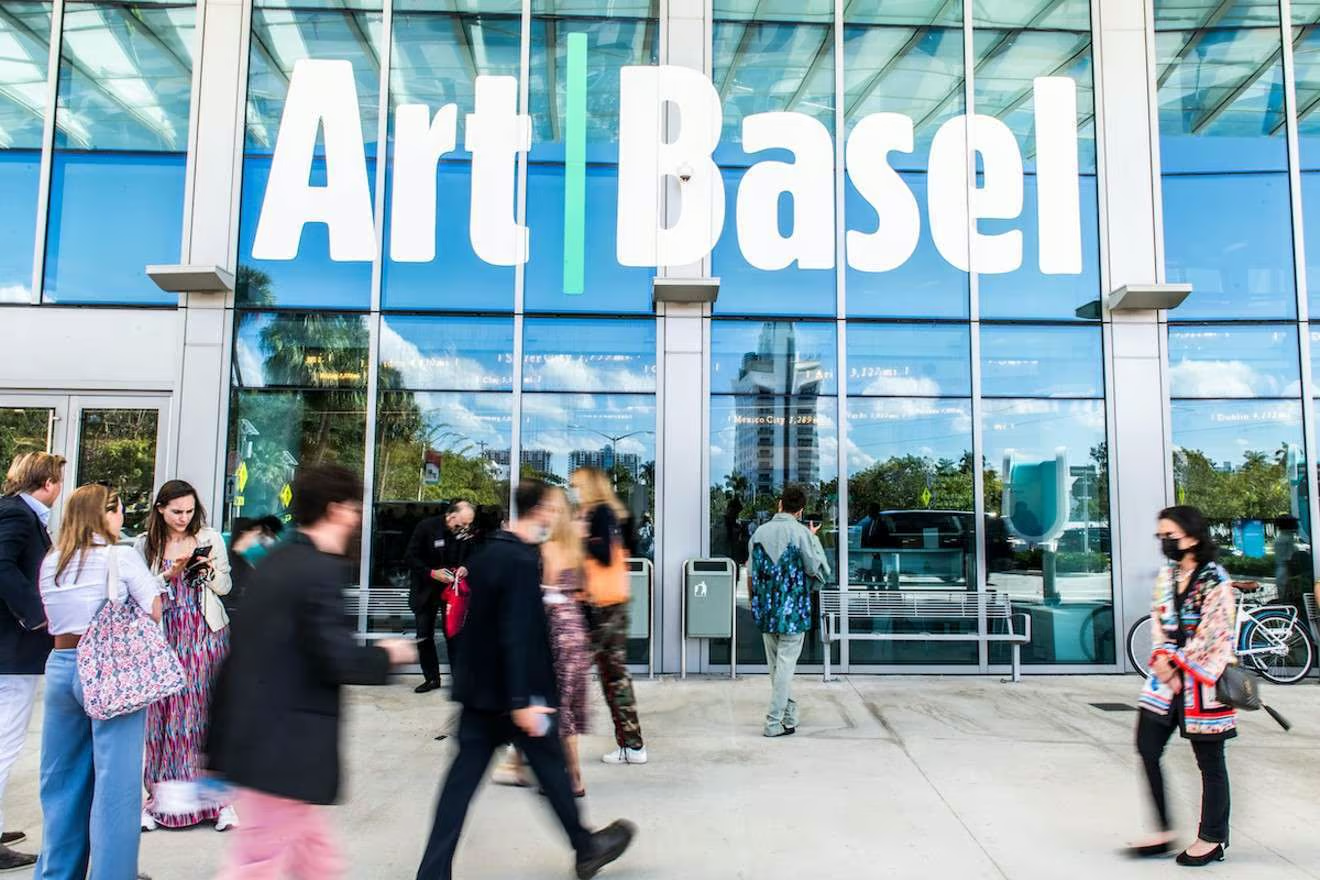
This is Miami at its most eventful and its most expensive. The calendar in this window includes Art Basel (December), New Year’s Eve, Ultra Music Festival (March), Spring Break, the Miami Open tennis tournament (March-April), and the F1 Grand Prix (May, which begins overlapping with peak season weather without peak-season prices).
If you’re coming for a specific event, this is when you have to come. If you’re flexible on timing, know that this window requires booking accommodation three to six months in advance for anything in South Beach. Last-minute availability exists but carries a significant price premium.
December through February offers the most reliably dry weather. March is excellent but busier. April is good weather at slightly lower prices than March. By May, the calendar starts to thin out, and the value improves.
May and October: The Best Value Windows
In over a decade of hosting guests in Miami Beach, the feedback we hear most consistently from returning visitors is that October and May are the months they wish they’d discovered sooner. The weather in both months is genuinely excellent, October in particular, and the pricing doesn’t reflect that yet.
May outside the F1 race weekend sits in a gap between spring break demand and summer pricing. Temperatures are warm (82-86°F), humidity is starting to build but isn’t oppressive, and afternoon showers are brief. Hotel and vacation rental rates are typically 20-30% below their March-April peak.
October is arguably the most underrated month in Miami. Temperatures have dropped from summer highs back into the low 80s, humidity has eased, and hurricane risk statistically drops sharply after mid-October. MIAFW (Miami Fashion Week) adds some cultural programming. Prices are favorable and the city operates at full quality without the December-April headcount.
June Through September: Off-Season
Summer in Miami is hot and humid, with daily afternoon thunderstorms that move through quickly. Temperatures run 87-93°F with high humidity from June through August. Hurricane season runs June 1 through November 30, though major storm activity is statistically concentrated from August through mid-October.
The upside: rates drop sharply. Vacation rentals in Miami Beach during summer can be 30-40% cheaper than peak-season equivalents. The beach is operational year-round, the restaurants are all open, and the city doesn’t shut down. For budget-conscious travelers and those who genuinely enjoy warm weather, summer in Miami is a reasonable trade-off.
—
Miami’s Best Neighborhoods for Visitors
Miami is not one city in any useful experiential sense. South Beach feels nothing like Wynwood, and neither resembles Little Havana. Where you stay determines what version of Miami you’re experiencing, and that choice deserves more thought than most visitors give it.

South Beach
South Beach is the right base for first-time visitors and for anyone whose priorities are beach access, walkability, and proximity to Art Basel, Swim Week, or the concentrated restaurant and nightlife scene on and around Collins Avenue and Ocean Drive.
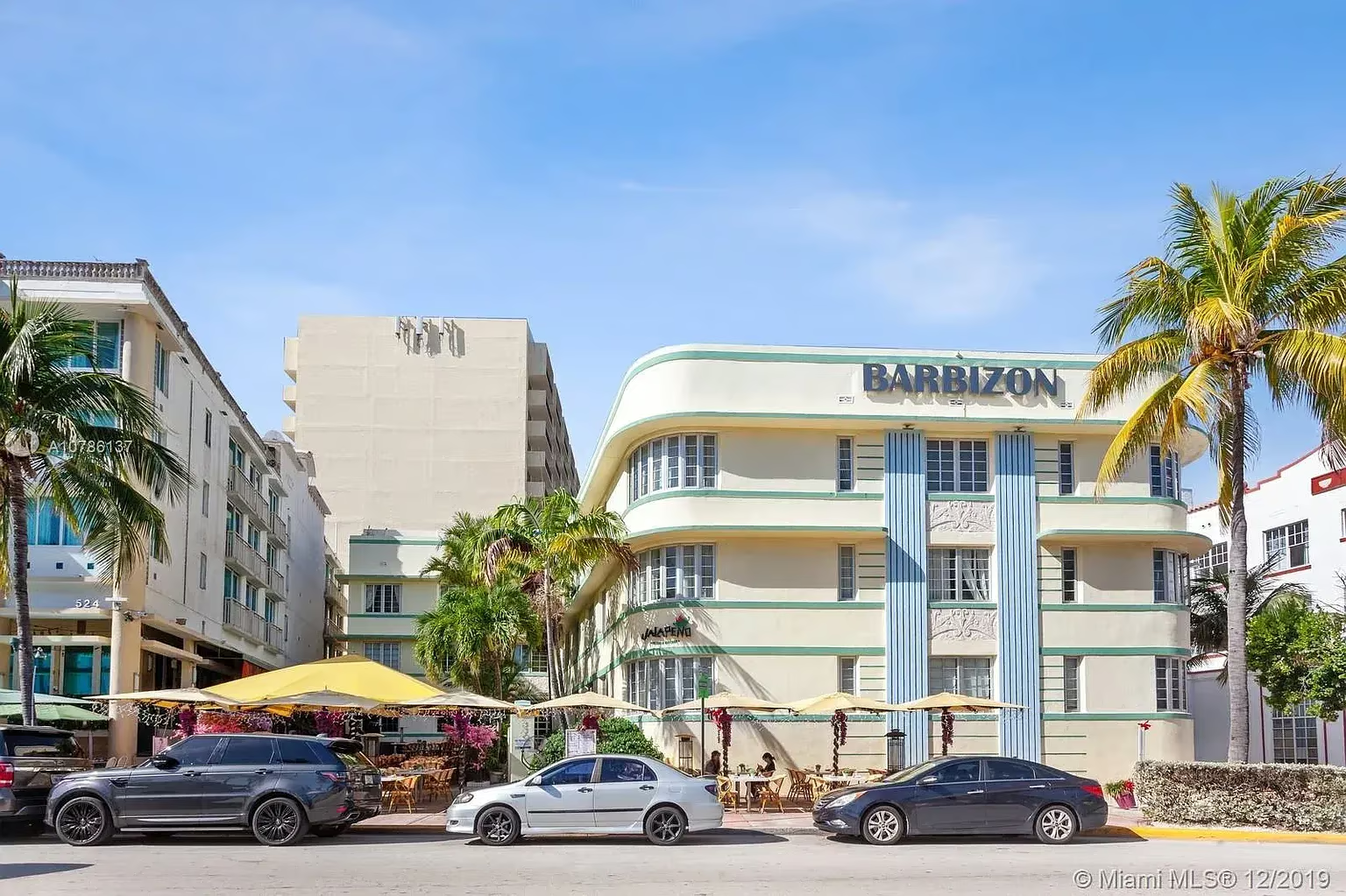
The Art Deco Historic District along Ocean Drive is one of the most photographed streetscapes in the country. Lincoln Road is a pedestrian shopping strip with restaurants, galleries, and open-air markets. The beach itself runs uninterrupted from South Pointe Park at the southern tip north through Mid-Beach.
South Beach’s weakness is noise and density. Washington Avenue and Ocean Drive are loud on weekends year-round. If you’re a light sleeper or prioritize quiet, a West Avenue or Alton Road address within South Beach gives you the walkability without the street noise.
Wynwood
Wynwood is the right neighborhood if your Miami trip is primarily art, design, restaurants, and nightlife rather than beach time. It’s about 15-20 minutes north of South Beach by car, built around the Wynwood Walls (the world’s largest open-air street art museum) and a dense concentration of galleries, breweries, and independent restaurants.
Wynwood is not a beach neighborhood, but its appeal is entirely distinct from South Beach: lower-key, more creative, and not dependent on weather. If Art Basel week is your reason for visiting, many of the satellite events and gallery openings happen in Wynwood.
Little Havana
Little Havana, centered on Calle Ocho (SW 8th Street), is where Miami’s Cuban community built its cultural and commercial heart after the 1960s. The Domino Park at SW 15th Avenue, the cigar shops along Calle Ocho, and the Viernes Culturales (Cultural Fridays) monthly street festival make it one of the most authentically Miami neighborhoods for visitors who want to move beyond the beach.
It’s about 20-25 minutes from South Beach by car or rideshare. Worth a half-day visit from any Miami base.
Brickell and Downtown
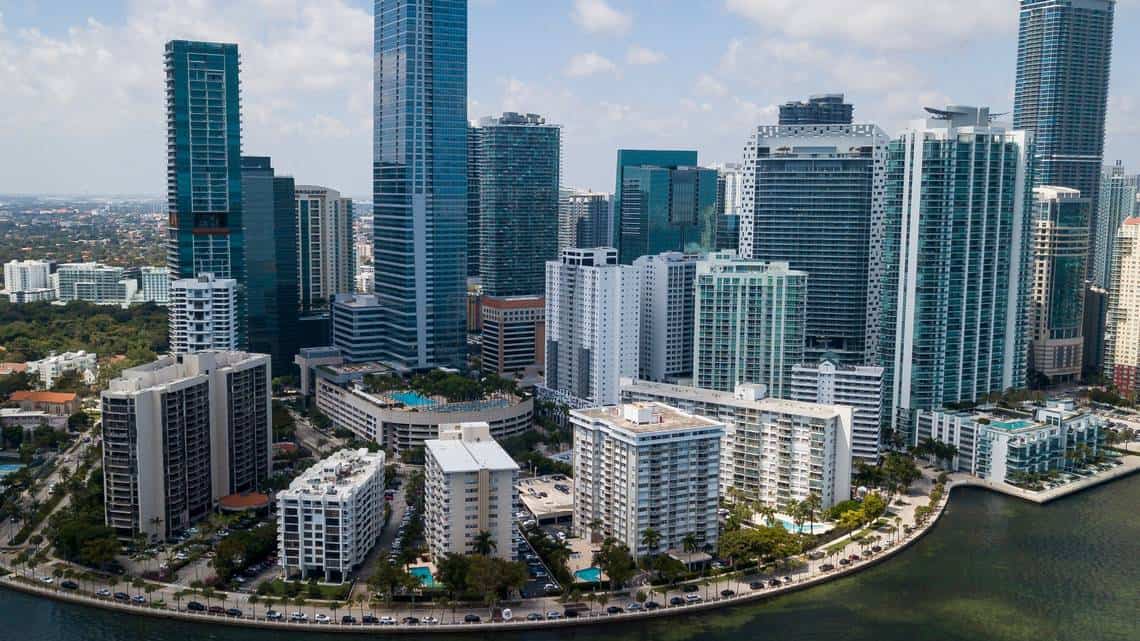
Brickell is Miami’s financial district, with a skyline that’s changed dramatically in the past decade. It’s the right base for business travelers or visitors who want a more urban, less touristy experience. The Brickell City Centre mall and the concentration of waterfront restaurants along Biscayne Bay are the main draws for visitors.
Downtown Miami and the Brickell waterfront also give easy access to Bayside Marketplace, the American Airlines Arena, and Bayfront Park, where Ultra Music Festival takes over in March.
—
How to Get Around Miami
Miami is a car city, and visitors who embrace that fact have an easier time than those who fight it. Public transportation exists (the Metrorail, Metromover, and Metrobus serve certain corridors) but doesn’t cover South Beach at all. The Metrorail connects Miami International Airport to Brickell in about 20 minutes, which is useful on arrival.
For most visitors in South Beach, the practical options are rideshare for trips off the peninsula, walking for anything on the peninsula, and cycling via the Citi Bike Miami network for mid-distance trips that don’t justify calling a car.
If you’re planning to visit Wynwood, Little Havana, Coral Gables, or the Everglades, a rental car or Uber is the most efficient option. Parking in South Beach is metered and competitive, so a rental car is only worth it if you’re regularly driving out of South Beach.
—
Where to Stay in Miami Beach: Hotels vs. Vacation Condos
The average nightly rate for a double room at a Miami Beach hotel runs approximately $464, with 4-star properties averaging $180 and 5-star properties around $879. On top of that, Miami Beach hotels add an average resort fee of $25-$60 per night, plus approximately 14% in combined state, county, and city resort taxes (NextBreakout, 2025). For a four-night stay at a mid-range property, resort fees alone can add $100-$240 to the bill before any incidentals.
Most first-time visitors book a hotel in South Beach by default. For a two-night trip, that’s often the right call. For anything longer, or for groups of two or more sharing costs, a private vacation condo almost always delivers better value.
The guests who stay with us most repeatedly are the ones who did the hotel-for-a-long-weekend calculation and realized the math wasn’t working. A condo with a kitchen, a living room, and no resort fees over four or five nights in Miami Beach tends to land well below what a comparable hotel room costs for the same dates, especially during peak season.
What to Look for in a Miami Beach Vacation Rental
- Licensed and legal: Miami Beach has strict short-term rental regulations. Verify the property has a valid Business Tax Receipt (BTR) and Resort Tax registration number before booking. Unlicensed rentals create risk for guests.
- Direct booking availability: Booking direct through a property management company removes OTA platform fees (Airbnb charges guests 14% on top of the nightly rate) and often gives you access to better rates and direct communication with the management team.
- Location within South Beach: West Avenue and Alton Road addresses put you within walking distance of the beach and the main restaurant strips without the Ocean Drive noise. For beach-first trips, a Collins Avenue or Ocean Drive property puts you steps from the sand.
Luxe Miami Condos Properties
All Luxe Miami Condos properties are in South Beach, legally registered, and available for direct booking. A few starting points by trip type:
- Sham Ocean Barbizon — Ocean Drive Studio, on Ocean Drive, steps to the beach and nightlife — best for couples (4.60★)
- 1100 West 410 — Bay View Balcony King Suite, 1100 West Ave, bay view, pool, kitchen — sleeps 4 (4.75★)
- 1100 West 726 — 2 Bedroom 2 Bath Bay View Suite, 1100 West Ave, pool, gym, spa — sleeps 6, best for groups (4.70★)
- 1 Homes 1006 — Luxury Oceanfront Resort Suite, 1 Hotel & Homes building, beachfront, 5-star resort amenities — sleeps 5 (5.00★)
View all 18 properties at booking.luxemiamicondos.com/all-listings. Check Availability and Book Direct
—
FAQ: Visiting Miami
What is the best time of year to visit Miami?
The most comfortable weather is December through April, when temperatures run 65-82°F with low humidity. For the best combination of good weather and lower prices, October and May (outside major event weekends) are the strongest value windows.
What are the best neighborhoods to stay in as a first-time visitor to Miami?
South Beach is the most walkable and most convenient base for first-time visitors, with beach access, Art Deco architecture, restaurants, and easy rideshare to Wynwood and other neighborhoods. For a quieter stay, a West Avenue or Alton Road address within South Beach gives you the location without the Ocean Drive noise.
How do I get from Miami International Airport to South Beach?
The simplest options are rideshare (about 25-35 minutes depending on traffic, typically $25-$45) or a metered taxi. The Metrorail connects the airport to Brickell in about 20 minutes for $2.25, but South Beach requires a transfer to another form of transport from there. Renting a car is worth considering only if you plan to drive outside South Beach regularly.
Is a hotel or vacation condo better for a Miami Beach trip?
For trips of two nights or less, a hotel is often the most convenient choice. For three or more nights, especially for two or more travelers sharing costs, a private vacation condo in South Beach typically provides more space, kitchen access, and lower total cost once hotel resort fees are factored in.
What events should I plan around when visiting Miami?
The highest-demand event windows are Art Basel (December), New Year’s Eve, Ultra Music Festival (March), Spring Break (March-April), the F1 Grand Prix (May), and PARAISO Swim Week (late May). Book accommodation three to six months in advance for any of these events.
Joe Semary is the owner of Luxe Miami Condos, a Miami Beach vacation rental management company established in 2012. He has hosted guests from more than 40 countries who have visited Miami across every season and every major event week. Book direct at booking.luxemiamicondos.com or reach out at info@luxemiamicondos.com.